

Description
The Divine Beauty of Pichwai Art
Pichwai art is one of India’s most exquisite and sacred traditional art forms—an artistic expression that blends devotion, storytelling, and intricate craftsmanship. Originating over 400 years ago in Nathdwara, Rajasthan, Pichwai paintings were created as backdrops for the idol of Shreenathji, a revered form of Lord Krishna. The word “Pichwai” comes from “pichh” meaning back and “wai” meaning hanging, referring to the grand artworks displayed behind the deity in temples.
More than just paintings, Pichwais are a divine offering—each stroke filled with devotion, symbolism, and spiritual intention.
A Tradition Rooted in Devotion
Pichwai art evolved within the Pushtimarg sect, founded by Vallabhacharya, where rituals, celebrations, and the life of Krishna form the core of worship. The paintings depict the deity’s various moods, festivals, and seasons. Each Pichwai narrates a moment from Shreenathji’s life—his playful leelas with the gopis, his love for nature, or his divine presence during festivals like Annakut, Sharad Purnima, Holi, and Janmashtami.
Traditionally, these artworks are massive, detailed, and highly ornate, created to transform temple spaces into immersive spiritual environments. Even today, Pichwai continues to be deeply linked with ritual, prayer, and storytelling.
Intricate Craftsmanship and Technique
The creation of a Pichwai is a meticulous process requiring immense skill and patience. Artisans often take weeks or months to complete a single painting. Every element is hand-drawn with precision, and natural pigments—derived from stones, minerals, flowers, and precious metals—were traditionally used to give the artwork its rich colors and enduring charm.
Key features include:
-
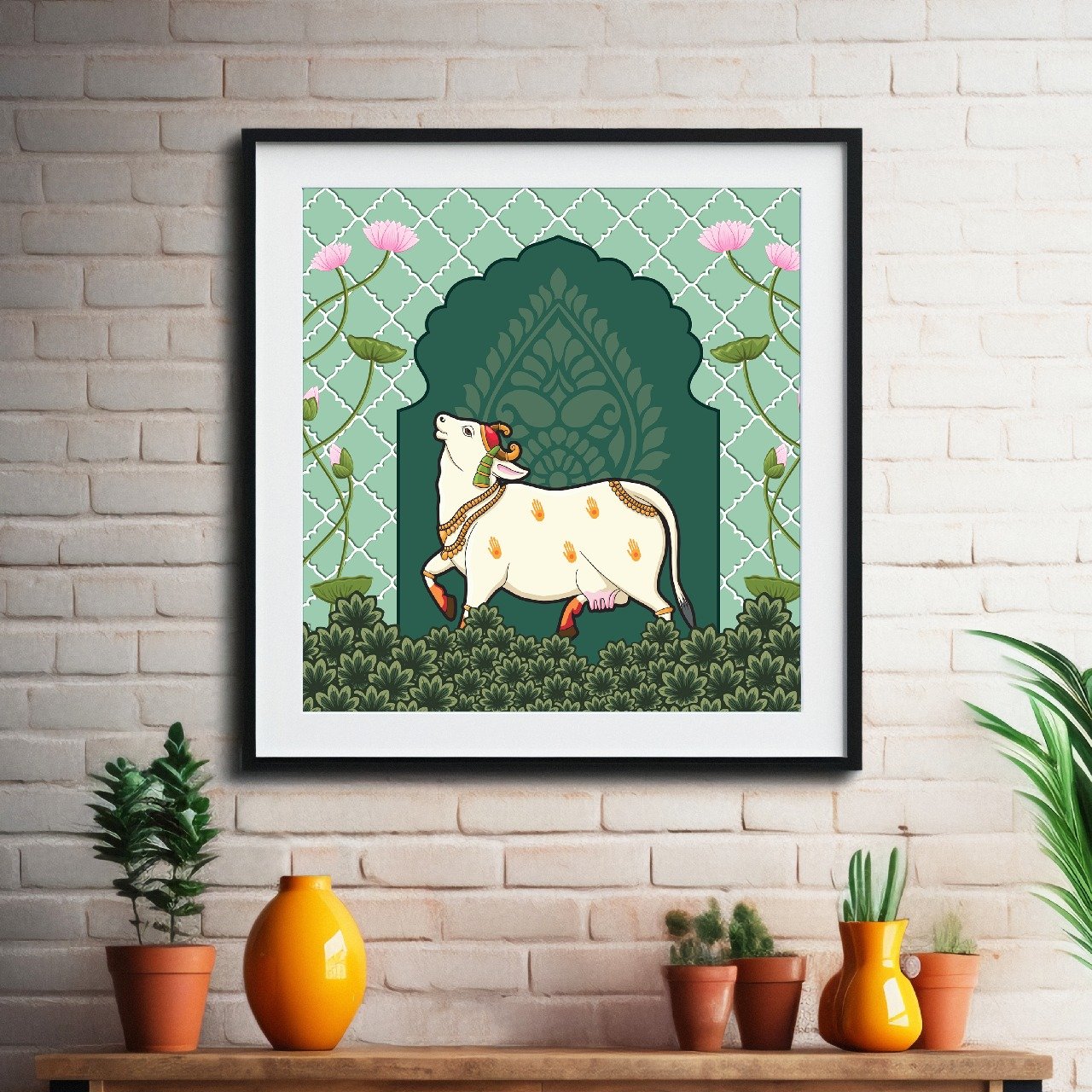
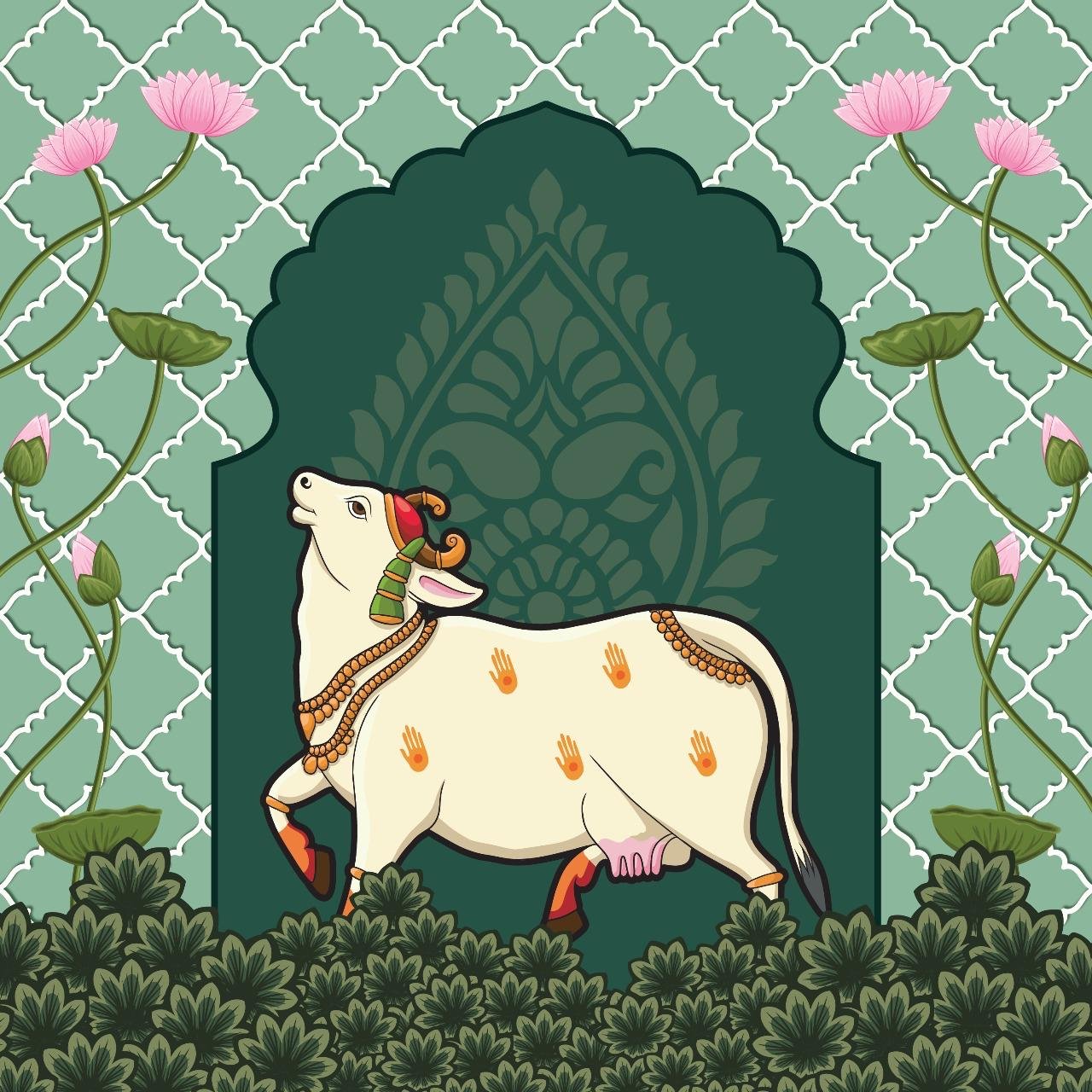
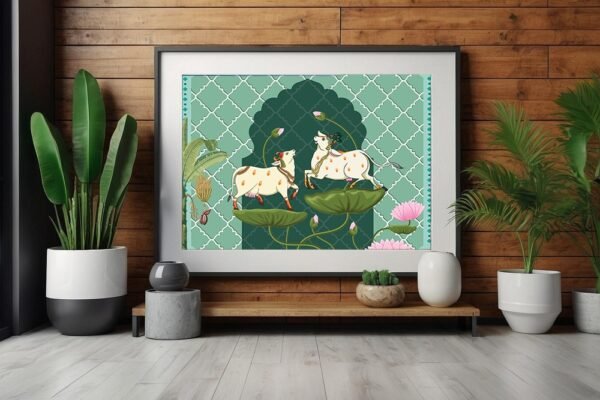
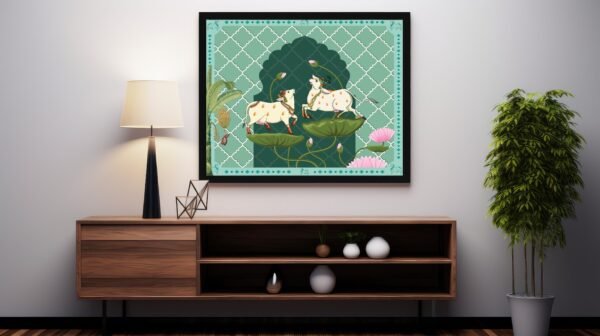
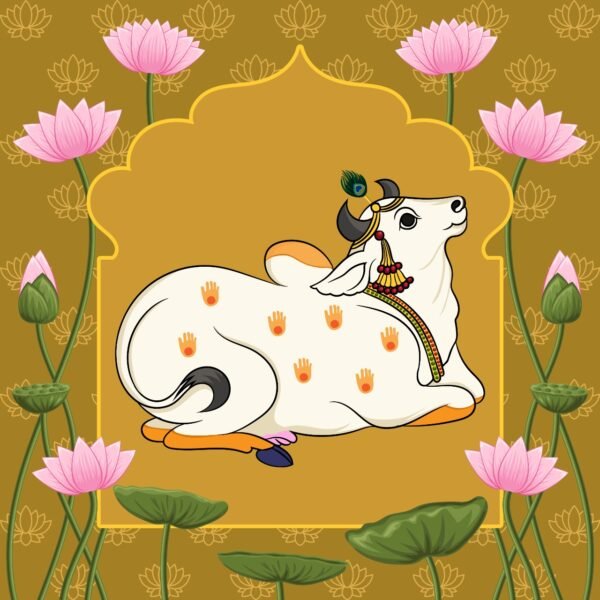
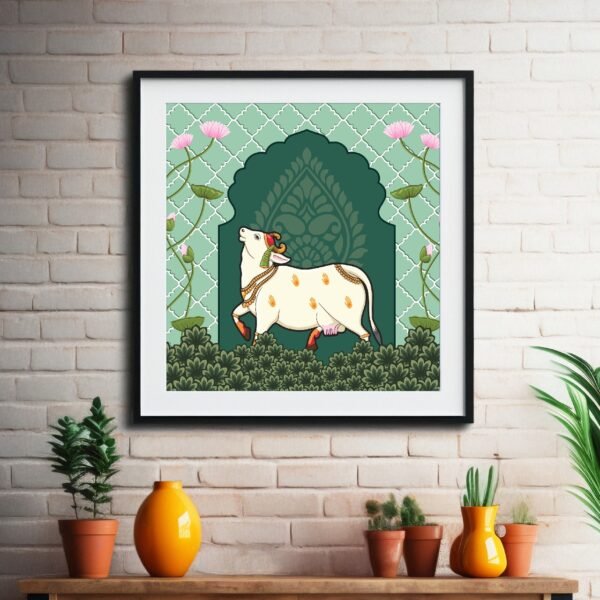
Detailed patterns showcasing lotus flowers, cows, peacocks, Govardhan hill, and divine ornaments.
-
Symmetry and balance, symbolizing cosmic order and spiritual harmony.
-
Grand compositions filled with rhythmic motifs and storytelling elements.
-
Fine brushwork highlighting jewelry, textiles, and divine expressions.
Gold leaf and natural indigo were often used to create depth, brilliance, and a sense of grandeur.
Iconic Motifs in Pichwai
Certain symbols make Pichwai instantly recognizable:
-
Lotus flowers – representing purity, devotion, and divine beauty; one of the most loved motifs in Pichwai.
-
Cows – symbolizing abundance and Krishna’s deep connection with nature.
-
Peacocks & birds – bringing life, grace, and movement into the artwork.
-
Shrinathji’s adornments – intricate jewels, garments, and ornaments emphasizing royalty and devotion.
Together, these motifs create a rich visual language that celebrates spirituality and the natural world.
Pichwai in Modern Homes
While rooted in tradition, Pichwai has evolved beautifully for contemporary décor. Artists now reinterpret the style with modern colors, minimal forms, and versatile compositions—making it suitable for living rooms, hallways, mandir spaces, offices, and luxury interiors.
Modern Pichwai art adds:
-
Elegance through its intricate patterns and classical beauty.
-
Spirituality by bringing divine energy into the home.
-
Cultural richness with motifs inspired by Rajasthan’s heritage.
-
A sense of luxury through detailed craftsmanship and artistic depth.
It blends seamlessly into both traditional and modern spaces, bringing harmony, color, and storytelling to walls.
The Enduring Legacy
Pichwai art is not just an art form—it is a cultural treasure, an offering of devotion, and a timeless symbol of Indian heritage. Its ability to combine spirituality with artistic mastery has kept it alive for centuries. Today, it continues to inspire new generations of artists and admirers, carrying forward a divine tradition that celebrates beauty, devotion, nature, and the eternal grace of Shreenathji.
With its intricate details and sacred symbolism, Pichwai art remains one of the most enchanting and meaningful styles in the world of traditional Indian art—an everlasting connection between the divine and the devotee.



Reviews
There are no reviews yet.