

Description
The Divine Legacy of Pichwai Art
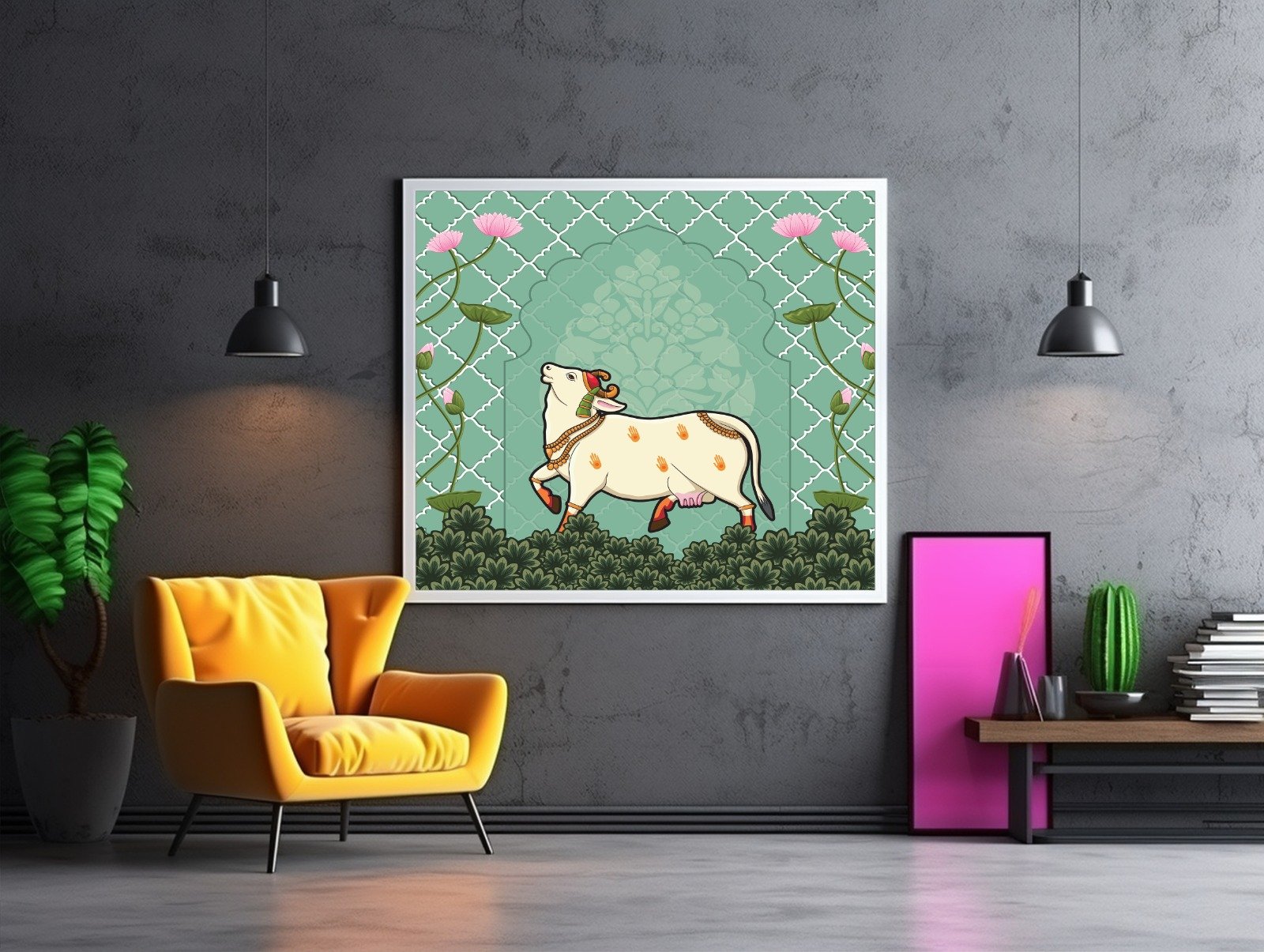
Pichwai art is a revered and intricate form of traditional Indian painting that beautifully blends devotion, storytelling, and artistic mastery. Originating over four centuries ago in the sacred town of Nathdwara, Rajasthan, Pichwai paintings were created as grand textile backdrops for the idol of Shrinathji, a beloved child form of Lord Krishna. The term “Pichwai” comes from the words “pichh” (back) and “wai” (hanging), reflecting their original purpose as decorative hangings placed behind the deity during temple rituals.
More than visual art, Pichwai is a spiritual offering—each artwork narrates divine stories, seasonal celebrations, and moments of devotion, making it an essential part of the Pushtimarg tradition.
Sacred Origins and Cultural Significance
Pichwai art flourished under the guidance of the Vallabhacharya sect, where devotion to Krishna is expressed through elaborate rituals, festivals, and artistic representation. Each Pichwai painting corresponds to specific occasions such as Annakut, Sharad Purnima, Holi, Janmashtami, and Govardhan Puja. These artworks transform temple spaces into immersive divine environments, aligning visual beauty with spiritual emotion.
Shrinathji is often portrayed standing on a lotus pedestal, adorned with detailed jewelry and vibrant garments, symbolizing prosperity, compassion, and divine grace. Surrounding motifs narrate stories of Vrindavan, cows grazing peacefully, blooming lotuses, celestial beings, and rhythmic floral patterns—each element carrying symbolic meaning.
Intricate Craftsmanship and Technique
The creation of a Pichwai artwork is an act of patience and devotion. Traditionally painted on handwoven cotton cloth, these artworks are created using fine brushes and natural pigments derived from minerals, stones, flowers, and gold or silver leaf. Completing a single Pichwai can take weeks or even months, as artisans carefully build layers of detail and color.
Key characteristics include:
-
Highly detailed compositions filled with floral patterns and symbolic motifs
-
Symmetry and balance, reflecting cosmic harmony
-
Rich color palettes, often dominated by reds, blues, greens, and gold
-
Elaborate ornamentation, highlighting Shrinathji’s attire and divine aura
The use of gold leaf enhances the painting’s grandeur, lending it a luminous, temple-like presence that elevates its spiritual and aesthetic value.
Iconic Motifs and Symbolism
Pichwai art is instantly recognizable due to its symbolic elements:
-
Lotus flowers symbolize purity, devotion, and divine beauty
-
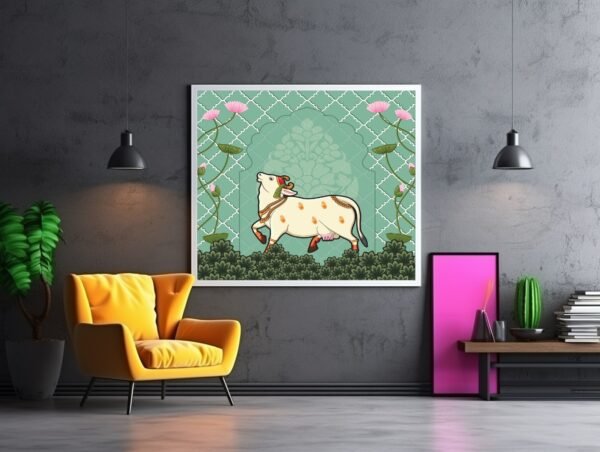
Cows represent abundance, nurturing, and Krishna’s deep bond with nature
-
Peacocks and birds add grace, rhythm, and life to the composition
-
Floral vines and borders signify prosperity and continuity
Each motif is placed with intention, contributing to a visual narrative that celebrates both the divine and the natural world.
Pichwai in Contemporary Spaces
While deeply rooted in tradition, Pichwai art has evolved to suit modern interiors. Contemporary interpretations retain traditional motifs while introducing refined color palettes, minimalist compositions, and versatile formats such as framed prints, canvas art, and wallpapers. This adaptability allows Pichwai art to blend effortlessly into modern homes, luxury spaces, offices, and meditation areas.
In today’s interiors, Pichwai art offers:
-
Spiritual calm and positivity
-
Cultural richness and heritage value
-
Visual elegance and artistic depth
-
A timeless statement of devotion and luxury
Whether displayed in a mandir room or as a statement wall piece, Pichwai art adds warmth, reverence, and sophistication to any environment.
A Living Tradition
Pichwai art continues to thrive through the dedication of skilled artisans who preserve this sacred tradition while embracing contemporary design sensibilities. It stands as a testament to India’s rich artistic heritage, where art is not created for admiration alone, but as an act of devotion and storytelling.
A Timeless Expression of Faith
Pichwai art is more than an artistic style—it is a divine language that speaks through color, detail, and symbolism. Each painting invites the viewer into a sacred narrative, offering a moment of peace, devotion, and cultural connection.
Through centuries, Pichwai art has remained a symbol of faith, craftsmanship, and timeless beauty—an eternal bridge between art and spirituality.


Reviews
There are no reviews yet.